Vanderhorn / Solutions
Operational on two hosts — follow-up monitoring continues
hddctl HDD storage management for Linux and ZFS
Let hard drives rest. Ready when needed.
hddctl automatically lets hard drives rest when not needed and makes them available again when storage is accessed. It reduces energy consumption, noise and heat without complex manual operation. In cooled environments it can also lower cooling energy demand.
From activity to standby and back
Idle
Let disks rest when possible.
hddctl reduces unnecessary disk running time, energy use, noise and heat by placing HDDs into standby under controlled conditions. In cooled environments this can also reduce cooling demand.
Available
Available when needed.
When storage is requested, the four HDDs wake in parallel. The ZFS pool remains imported so storage can become available when needed.
Automatic
Runs independently.
hddctl monitors actual storage activity and returns the disks to standby after five minutes of measured inactivity. Normal application access does not require special hook scripts.
Monitoring
Clear status and control.
The CLI provides live status with pause controls and measurement timestamps. Active and resolved faults are clearly distinguished; SMART monitoring and phone notifications are enabled.
Field-tested
Tested in real use.
hddctl operates on two Proxmox hosts. Local and remote backups and limited recovery tests with checksum verification have been performed. Further maintenance acceptance remains in progress.
Operational on two Proxmox hosts
On two Proxmox hosts, hddctl automatically manages HDD standby and parallel wake-up. The first complete scheduled nightly backup processed all 29 selected guests; afterwards the four disks returned to standby automatically.
Local and remote backups have been tested, including limited recovery checks with checksum verification. SMART monitoring and phone notifications are active. Initial routine maintenance runs and individual backup observations remain under review.
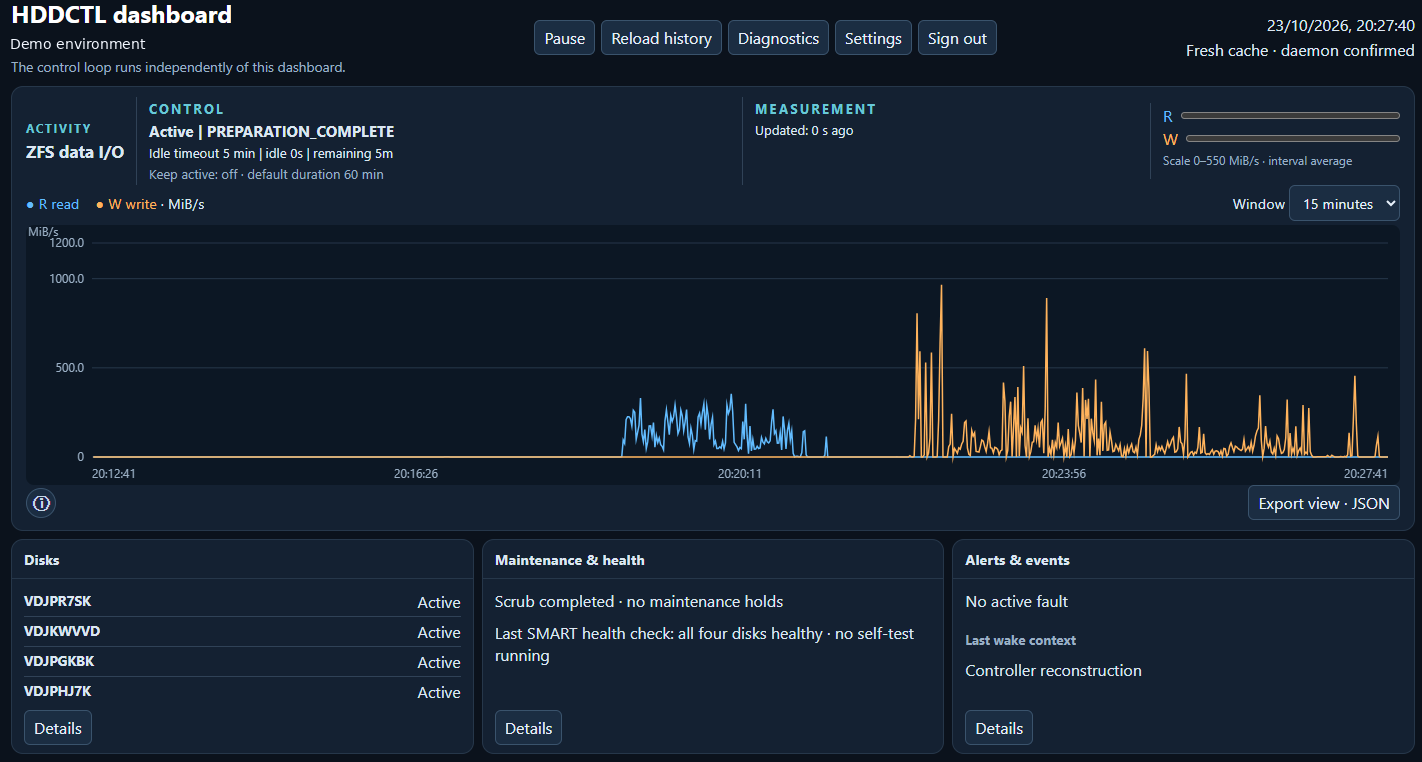
Redesigned dashboard
hddctl now includes an English-language dashboard with automatically scaling charts and activity meters, per-disk status, and concise maintenance and fault information. The new interface runs on two in-house systems and has been evaluated in everyday use. Further stress testing will follow.
Interested in hddctl?
Would you like to know whether hddctl fits your storage environment? Get in touch to discuss your needs and possible applications.
Get in touch